
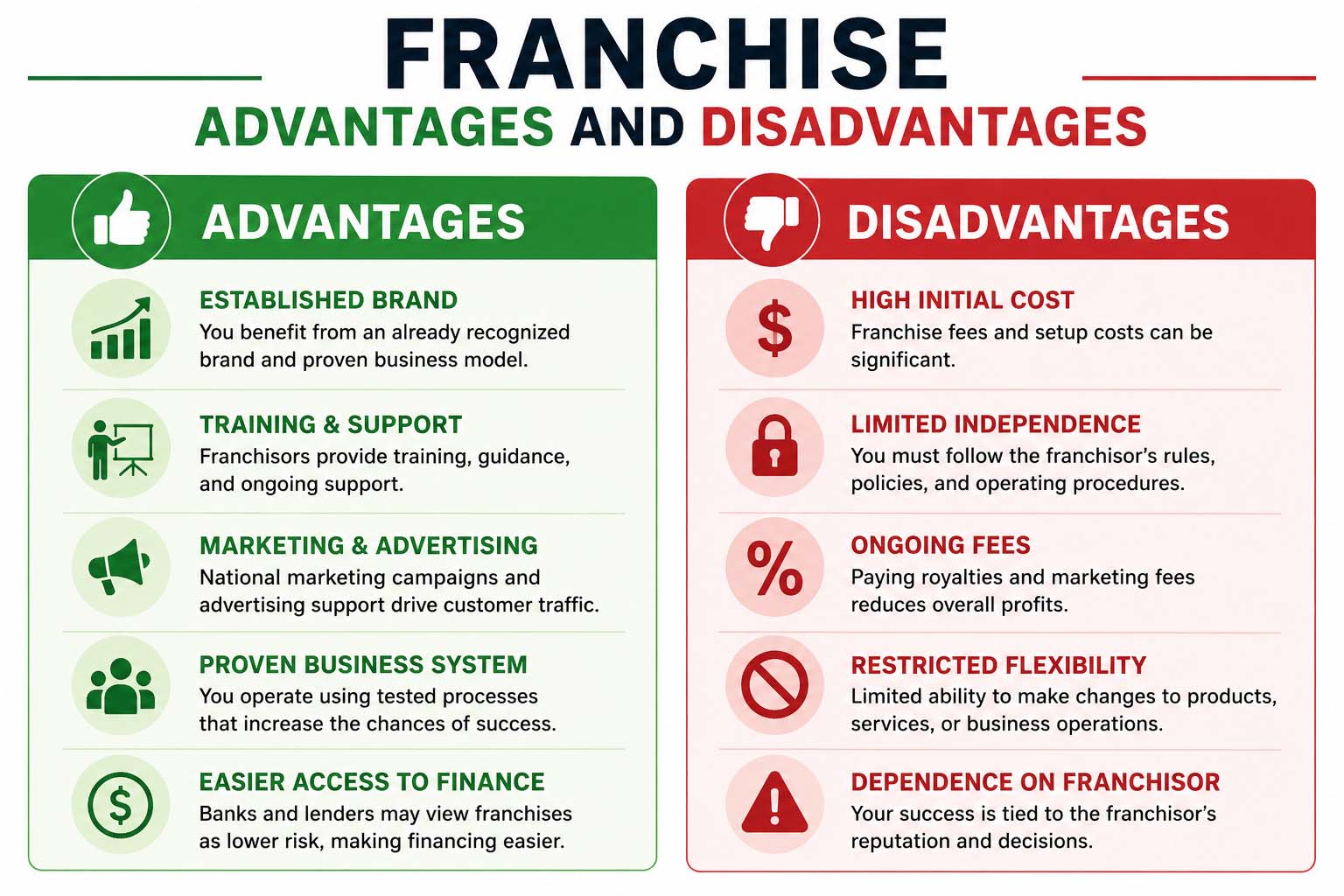
Franchise Advantages and Disadvantages: Is Franchising the Right Business Choice?
Many aspiring entrepreneurs dream of owning a business but don’t want to start from scratch. That’s one reason why understanding franchise advantages and disadvantages is so valuable. A franchise offers the opportunity to operate under an established brand while receiving training, systems, and ongoing support. At the same time, franchise ownership comes with costs, rules, and long-term commitments that may not suit every entrepreneur.
Before investing your savings, it’s worth understanding both the opportunities and the challenges so you can make a confident business decision.
What Is a Franchise?
A franchise is a business arrangement in which an individual or company (the franchisee) purchases the right to operate a business using another company’s brand, products, and operating system.
Instead of creating a completely new business model, franchise owners follow a proven system developed by the franchisor.
Most franchise agreements include:
- Brand licensing
- Initial training
- Marketing support
- Operating procedures
- Ongoing business guidance
- Access to established suppliers
If you’re unfamiliar with the overall process, learning How to Start a Franchise can help you understand the legal, financial, and operational steps involved before investing.
Franchise Advantages and Disadvantages at a Glance
Before examining each point in detail, here’s a quick comparison.
| Advantages | Disadvantages |
|---|---|
| Established brand recognition | Initial franchise fees |
| Proven business model | Ongoing royalty payments |
| Training and support | Limited operational freedom |
| Easier customer trust | Contract restrictions |
| Marketing assistance | Less flexibility for innovation |
The value of these factors depends on your experience, budget, and business goals.
Major Advantages of Owning a Franchise
Many entrepreneurs choose franchising because it reduces some of the uncertainty associated with launching a completely new business.
Let’s look at the biggest benefits.
Established Brand Recognition
One of the greatest advantages is immediate brand awareness.
Customers are often more willing to buy from a business they already recognize and trust. Instead of spending years building a reputation, franchise owners benefit from an existing customer base and established marketing.
This can make it easier to attract customers from the first day of operation.
Proven Business System
Creating business processes from scratch takes time.
Franchisors usually provide tested systems covering:
- Daily operations
- Inventory management
- Customer service
- Marketing
- Staff training
- Technology
These systems reduce guesswork and allow franchisees to focus on running the business efficiently.
Comprehensive Training and Ongoing Support
Many first-time business owners appreciate the training provided by franchise companies.
Support may include:
- Initial onboarding
- Operations manuals
- Marketing guidance
- Technology assistance
- Site selection support
- Ongoing coaching
This level of support can shorten the learning curve for entrepreneurs with limited business experience.
Easier Access to Financing
Although financing is never guaranteed, lenders may feel more comfortable supporting businesses with established brands and predictable operating models.
Some franchisors also maintain relationships with financial institutions that understand their business model.
Shared Marketing Resources
Marketing can be one of the biggest expenses for an independent business.
Many franchise systems collect marketing contributions from franchisees to fund national or regional advertising campaigns.
This allows individual owners to benefit from professional marketing that might otherwise be too expensive.
Why Many Entrepreneurs Choose Franchising
The advantages and disadvantages of owning a franchise often come down to balancing independence with support.
Franchise ownership appeals to people who prefer following a structured business model instead of building every process themselves.
This approach works especially well for entrepreneurs who value:
- Predictable systems
- Recognized branding
- Ongoing training
- Operational guidance
- Marketing assistance
Comparing Franchises With Independent Businesses
Choosing between an independent business and a franchise depends on your priorities.
| Franchise | Independent Business |
| Established brand | Build your own brand |
| Proven operating system | Create your own systems |
| Training provided | Self-directed learning |
| Franchise fees | Greater startup flexibility |
| Operating rules | Full creative control |
Neither model is automatically better.
Your decision should reflect your experience, financial resources, and long-term business goals.
Business Planning Before Buying a Franchise
Before signing a franchise agreement, take time to evaluate whether the opportunity fits your personal and financial objectives.
Consider questions such as:
- How much capital do I have?
- Am I comfortable following company rules?
- What industries interest me?
- What ongoing fees will I pay?
- What level of support do I expect?
Reviewing these factors early can help you avoid costly mistakes later.
Strong planning also includes evaluating your overall Business Level Strategy so the franchise you choose aligns with your target customers, competitive position, and long-term growth plans.
Franchise Ownership Isn’t Right for Everyone
Some entrepreneurs enjoy building businesses from the ground up, while others prefer operating within an established framework.
People who value complete creative freedom may find franchise rules restrictive.
On the other hand, individuals who appreciate proven systems and structured guidance often find franchising to be a comfortable path into business ownership.
For those still deciding between business models, comparing franchises with other ownership structures can provide valuable perspective before making a financial commitment.
Main Disadvantages of Franchising
While the benefits can be appealing, every entrepreneur should also understand the risks before signing a franchise agreement. The advantages and disadvantages of a franchise become much clearer when you look beyond the brand name and consider the long-term responsibilities.
High Initial Investment
Many franchises require a significant upfront investment.
Depending on the brand, startup costs may include:
- Franchise fees
- Equipment purchases
- Property or lease expenses
- Inventory
- Insurance
- Employee training
Even well-known franchises may require substantial capital before the business opens.
Ongoing Royalty and Marketing Fees
Many also charge contributions toward national or regional marketing campaigns.
While these services can provide value, they also reduce the business owner’s overall profit.
Before investing, carefully review every fee outlined in the franchise agreement.
Limited Freedom
One trade-off of franchise ownership is reduced flexibility.
Franchisees usually must follow company standards covering:
- Products and services
- Pricing policies
- Branding
- Store design
- Marketing materials
- Operating procedures
Entrepreneurs who enjoy creating their own ideas may find these requirements restrictive.
Dependence on the Brand’s Reputation
A franchise owner works under an established name, which has advantages but also creates risks.
If the franchisor experiences negative publicity or declining customer confidence, individual franchise locations may also feel the impact even when they are managed well.
Compare the Advantages and Disadvantages of Opening a Business Franchise
When people ask how to compare the advantages and disadvantages of opening a business franchise, the answer depends on personal goals and business experience.
Use this simple decision guide.
| Consideration | Franchise | Independent Business |
|---|---|---|
| Brand recognition | Immediate | Built over time |
| Creative freedom | Limited | High |
| Business support | Extensive | Self-managed |
| Startup guidance | Structured | Independent |
| Long-term flexibility | Lower | Greater |
If you value proven systems and ongoing support, a franchise may be the better choice. If innovation and complete independence are your priorities, starting your own business may be more rewarding.
Is a Franchise Better Than Other Business Structures?
Business ownership is not one-size-fits-all.
Some entrepreneurs compare franchising with operating an independent company under different legal structures.
For example, reviewing corporation advantages and disadvantages can help you understand how liability, taxation, and ownership differ from a franchise operating model.
Likewise, entrepreneurs considering shared ownership may benefit from learning about the benefits of partnership before deciding whether running a business with partners better matches their goals.
Common Mistakes Franchise Buyers Make
Buying into a successful brand does not guarantee business success.
Avoid these common mistakes before signing a franchise agreement.
Focusing Only on Brand Recognition
A famous brand can attract customers, but profitability also depends on:
- Location
- Operating costs
- Local demand
- Competition
- Management quality
Always evaluate the business opportunity as a whole.
Skipping Financial Research
Every franchise has different startup costs and ongoing expenses.
Create realistic financial projections that include:
- Initial investment
- Monthly operating costs
- Royalty payments
- Marketing fees
- Emergency reserves
This helps you understand how long it may take to recover your investment.
Not Reading the Franchise Agreement Carefully
The franchise agreement explains your rights and responsibilities.
Review important details such as:
- Contract length
- Renewal options
- Territory rights
- Exit conditions
- Required purchases
Professional legal advice can help you understand complex terms before committing.
Best Practices for Successful Franchise Ownership
Owning a franchise requires more than following a manual.
Successful franchisees often share these habits.
Follow the Business System
The franchise model is built around proven processes.
Following established procedures helps maintain consistent customer experiences and supports long-term business performance.
Build Strong Local Relationships
Even national brands depend on local customer loyalty.
Participate in community events, provide excellent service, and encourage repeat business to strengthen your local reputation.
Monitor Business Performance
Track key performance indicators such as:
- Revenue
- Expenses
- Customer satisfaction
- Employee turnover
- Inventory levels
Regular reviews help identify opportunities to improve efficiency and profitability.
Think Beyond the First Location
Many successful franchise owners expand by opening additional locations after gaining experience.
If expansion is part of your long-term plan, choose a franchise system that supports multi-unit ownership.
Entrepreneurs researching expansion opportunities often compare franchises with the Most Profitable Businesses to evaluate long-term earning potential across different industries.
Frequently Asked Questions
What are the advantages and disadvantages of franchise ownership?
The main advantages include established branding, training, proven business systems, and marketing support. The disadvantages include franchise fees, ongoing royalties, limited flexibility, and contractual obligations.
Is buying a franchise less risky than starting a business from scratch?
A franchise can reduce some risks because it uses an established business model. Even so, every business carries financial risk, and success still depends on effective management and market demand.
Can franchise owners make their own business decisions?
Yes, but only within the rules established by the franchisor. Most franchise agreements require owners to follow standardized operating procedures and brand guidelines.
Are franchise fees worth paying?
That depends on the value provided by the franchisor. Strong training, marketing support, and brand recognition may justify the cost for many entrepreneurs.
Who should consider buying a franchise?
Franchising is often a good fit for people who want business ownership with structured guidance, established systems, and ongoing support instead of building a company entirely from scratch.
Making the Right Business Decision
Understanding the franchise advantages and disadvantages helps you choose a business model that matches your goals, budget, and management style. Franchising offers valuable benefits such as brand recognition, operational support, and proven systems, yet it also requires financial investment, ongoing fees, and a willingness to follow established rules.
Before making a commitment, compare several franchise opportunities, review every agreement carefully, and evaluate how each option fits your long-term business plans. A thoughtful decision today can create a stronger foundation for sustainable business success.